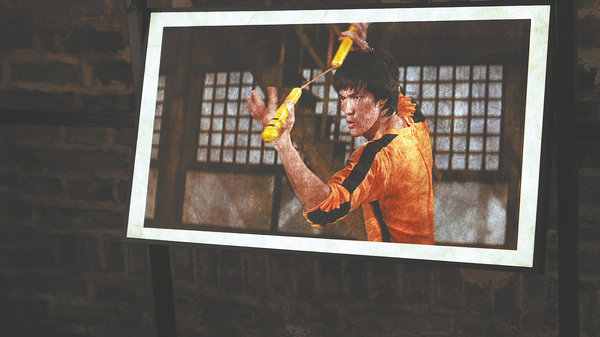
Jeet Kune Do
Introduction
Jeet Kune Do, often abbreviated as JKD, is a martial arts style developed by the iconic martial artist Bruce Lee. Unlike traditional martial arts, which often adhere to specific sets of techniques and forms, Jeet Kune Do is revolutionary in its approach, focusing on adaptability, efficiency, and directness. Bruce Lee conceived JKD as a way to transcend traditional martial arts limits, emphasizing the philosophy of "using no way as way" and "having no limitation as limitation." This art form not only incorporates physical techniques but also embodies a philosophical framework that encourages practitioners to cultivate an adaptable mindset in combat and life.
History
Origins
Jeet Kune Do's origins trace back to Bruce Lee's dissatisfaction with the rigidity of traditional martial arts that he studied, including Wing Chun Kung Fu. Lee believed that many of these systems were bound by inflexible structures that hindered practitioners from adapting to real-life combat situations. He sought to create a more fluid and practical system, drawing from various martial arts disciplines such as boxing, fencing, and other Kung Fu styles. The name Jeet Kune Do itself, meaning "The Way of the Intercepting Fist," reflects its emphasis on intercepting an opponent's movement to effectively neutralize attacks.
Development by Bruce Lee
Bruce Lee's development of Jeet Kune Do was a personal journey of exploration and innovation. His extensive research and practice across different martial arts techniques led him to distill what he viewed as essential principles for effective combat. Lee's foundational belief was that the martial artist must be like water, adaptable and formless, able to flow and change according to the opponent's movements. This philosophy was not only theoretical but was rigorously tested and refined through Lee's personal experiences in training, sparring, and teaching at his martial arts schools in the United States. He stressed the importance of physical conditioning, mental flexibility, and the integration of different martial arts techniques to create a holistic fighting system.
Evolution of Philosophy
Jeet Kune Do evolved beyond being a mere collection of martial arts techniques; it became a philosophy emphasizing personal liberation and self-expression. Bruce Lee encouraged his students and followers to question the conventions of traditional martial arts and explore their unique paths. By urging practitioners to discard what is unnecessary and adapt what is useful, Jeet Kune Do promotes individual creativity and the development of a personal fighting style. This philosophy has influenced many martial artists and thinkers, leading to a broader understanding of combat and self-discovery. Lee's writings and teachings continue to inspire martial artists worldwide, as they delve into the depths of this transformative philosophy.
Principles and Philosophy
The principles and philosophy of Jeet Kune Do are rooted in simplicity, directness, and personal freedom. At its core, JKD eschews the complex techniques and rigid forms of traditional martial arts, focusing instead on the most efficient means of attack and defense. Bruce Lee's concept of "interception" plays a crucial role in this philosophy, emphasizing the importance of preemptively countering an opponent's attack. The adaptability of JKD allows practitioners to tailor their techniques to suit their unique strengths and weaknesses. Furthermore, the philosophical underpinnings of Jeet Kune Do encourage practitioners to develop intuition, awareness, and a profound sense of inner peace, as they strive for mastery in both martial arts and life.
Influence on Martial Arts
Jeet Kune Do has had a significant influence on the martial arts world, challenging traditional norms and encouraging a more holistic approach to combat. Bruce Lee's emphasis on personal development and adaptability has inspired countless martial artists to explore and integrate techniques from different disciplines. JKD's principles have also influenced modern combat sports and self-defense systems, fostering an emphasis on practicality and efficiency. The impact of Jeet Kune Do extends beyond physical techniques, as its philosophical framework encourages practitioners to cultivate mindfulness, self-awareness, and personal growth.
Cultural Impact
Media and Literature
Bruce Lee's influence on popular culture is profound, particularly through his films and writings, which have introduced Jeet Kune Do to a global audience. Movies like Enter the Dragon have showcased Lee's martial arts philosophy, inspiring generations of viewers to explore the principles of JKD. Additionally, Lee's written works, such as The Tao of Jeet Kune Do, provide valuable insights into his approach to martial arts and life, offering readers a glimpse into the mind of a martial arts icon.
Popularity Around the World
Jeet Kune Do has gained popularity worldwide, appealing to martial artists and enthusiasts who resonate with its emphasis on adaptability and personal expression. Bruce Lee's legacy as a global icon continues to inspire practitioners from diverse backgrounds, fostering cross-cultural exchanges and the dissemination of martial arts knowledge. The enduring appeal of Jeet Kune Do lies in its universal principles, which transcend cultural and linguistic barriers, allowing individuals from different walks of life to connect with its philosophy and techniques.








